
BATTLE OF BRITAIN ‘LACE’
Veterans transitioning to civilian life will be able to continue accessing Defence bases for up to 2 years under a new program that started in June.
This program forms part of a response to Recommendation 82 of the Royal Commission into Defence and Veteran Suicide, which calls for a consistent approach to access to bases that will help ex-serving members and their families maintain social connections following separation from the Australian Defence Force.
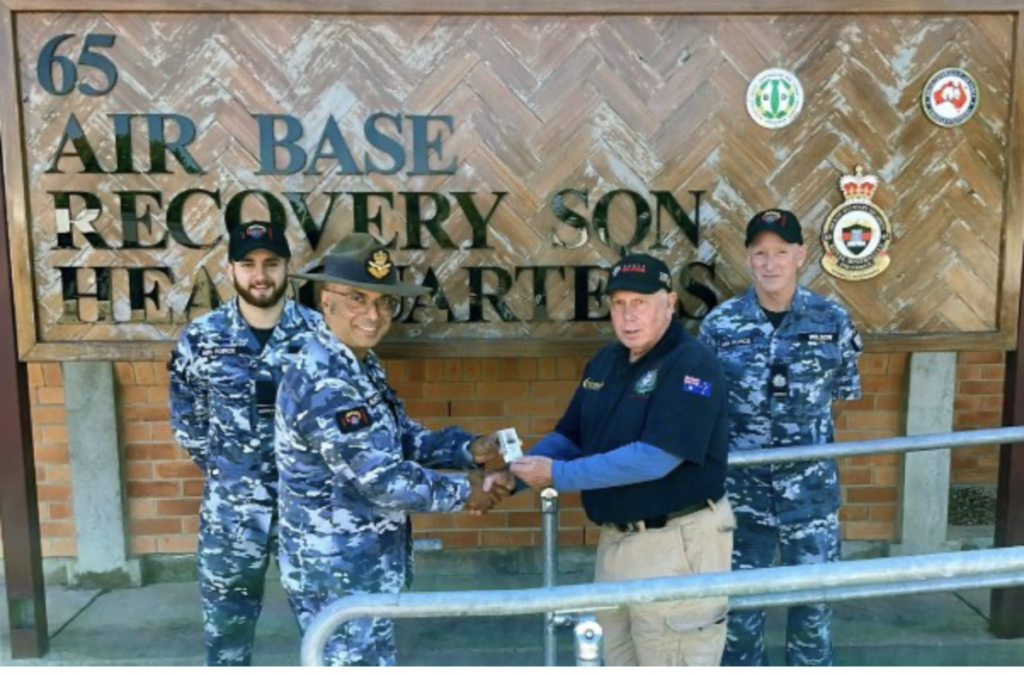
The first Veteran Defence Common Access Card (DCAC) recipient under the program is Sergeant David Humphry, who recently retired at RAAF Townsville after 50 years in the ADF.
He sees the importance of maintaining strong connections with former colleagues following transition from full-time service.
“Transitioning from service can be a difficult time, particularly after such a long career where your identity, routine and social networks are closely tied to the ADF,” SGT Humphry said.
“Having access to the Sergeants’ Mess and social events on the base helps to keep those connections going and provides a sense of continuity during what can otherwise be a significant life adjustment.”
Director General Estate Service Delivery Brigadier Gabrielle Follett said that the initiative is a practical step in strengthening how we support our people.
“As they transition from ADF service, it will allow veterans to maintain connection to their existing Defence social network, helping reduce the sense of disconnection at a critical time,” BRIG Follett said.
“This initiative reflects Defence”s commitment to implement the Royal Commission”s recommendations and deliver a more seamless, people‑centred transition experience for our veterans.
Commodore Belinda Greenwood, Director General Joint Transition Authority, said the introduction of the Veteran DCAC helps personnel and their families through their separation from the ADF.
“The Veteran DCAC represents a significant step in improving transition outcomes and recognises that maintaining connections with the Defence community plays an important role in supporting veterans long-term wellbeing,” CDRE Greenwood said.
The program started as a pilot activity across Townsville and the Albury/Wodonga Military Area between November 2025 and April 2026. There was a high level of interest outside the initial trial sites, highlighting the demand for an initiative that keeps veterans connected to their former peers and service life.
Story courtesy of Department of Defence, Canberra, ACT